
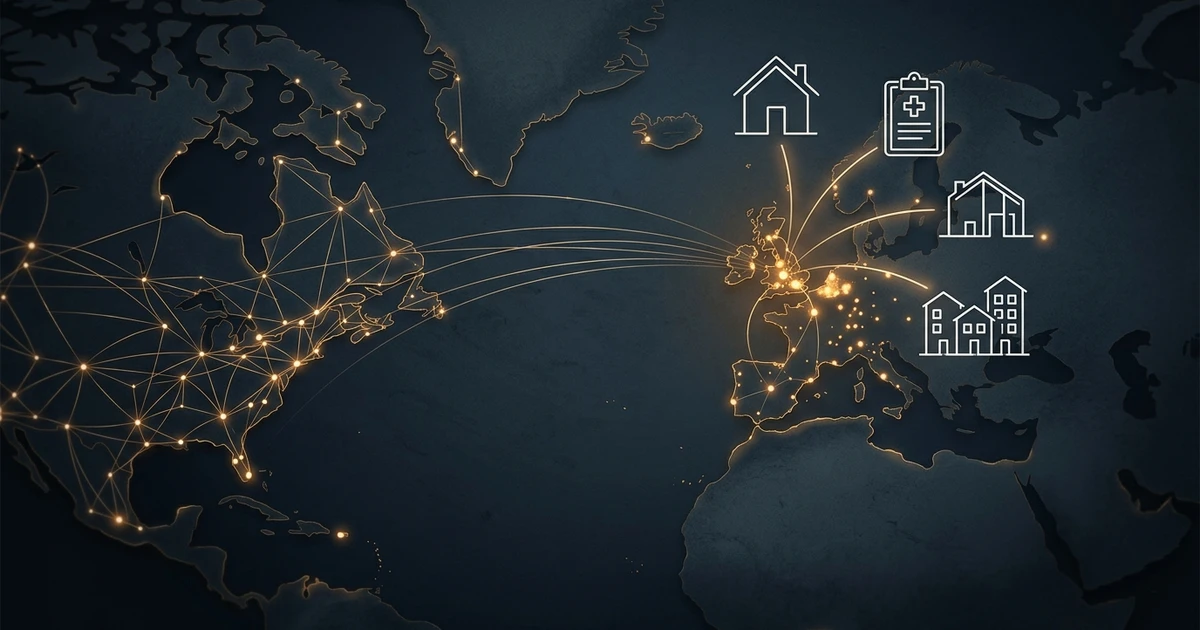
We’re taking The Sentry beyond property, and beyond the UK
This August and September, The Sentry, our UK lone worker safety app, is growing on three fronts at once. We’re opening the app to lone workers in all sectors with public facing staff, three of those sectors with a pressing need are domiciliary care, community healthcare and social housing, alongside the estate agency sector we’ve served since day one. We’re launching a new check-in timer inside the app, so a lone worker who misses a scheduled check-in automatically alerts their manager and their team, exactly as a triggered alarm would. And we’re taking The Sentry across the Atlantic, with a dedicated website and platform for the US and Canada.
I want to explain why now, why these sectors, and what each of these changes actually means for the people using our app every day and the businesses whose integrity we protect.
Why we didn’t stay a property-only product
The Sentry started as a personal safety app built for one problem I understood intimately: estate and letting agents doing solo viewings with strangers, often in empty properties, often with no one else knowing where they were. That problem is real, it’s well documented, and it’s still the core of what we do — our estate agency customers aren’t going anywhere, and the product we built for them isn’t changing, it’s ever improving and shall continue to as we learn of more ways to improve and help our customers to Go Safely™, our trademark that we hold so dear. (Becky has written before about how that personal experience shaped the company, if you’re curious where this started.)
But the more time we spent talking to safety and compliance leads outside property, the clearer it became that the underlying problem is far bigger than one sector. There are somewhere between 8 and 9 million lone workers in the UK — roughly one in four of the entire workforce. Only around 7.5% of them are covered by a proper lone worker safety tool. The other 92.5% are relying on WhatsApp groups, text messages, or nothing at all. And there’s a perception gap sitting underneath all of that: 91% of managers somehow believe they’re protecting their lone workers, but only 49% of workers actually feel safe doing their job alone. That gap between what employers think they’re doing and what their staff actually experience is, in my view, the single biggest opportunity in UK lone worker protection right now — and it isn’t unique to property.
The UK lone worker safety market itself is growing quickly, from around £75M this year toward roughly £108M by 2030, and software-only apps like ours are the fastest-growing part of it, ahead of the hardware-and-monitoring-contract model that’s dominated this category for years. That shift matters, because a lot of the sectors we’re moving into next are exactly the ones where affordable employee safety technology fits best: employers with large, often part-time or shift-based lone worker populations, who were never going to fit a £150-a-year hardware-and-alarm-receiving-centre contract in the first place, and who’ve been left with WhatsApp and hope instead. The Sentry fills this void perfectly, zero hardware for staff, an auditable activity log for the business to prove they are protecting their staff and an affordable price tag.
The three sectors we’re launching into first
We chose to launch into domiciliary and home care, community healthcare and NHS outreach, and social housing, in that order, for a simple reason: these are the sectors with the largest number of lone workers, the clearest regulatory duty of care, and — in our research — the least existing coverage from the established lone worker safety providers.
Domiciliary and home care is CQC-regulated, and care workers routinely visit clients alone, often in situations with a real risk of aggression. It’s also one of the sectors most exposed to the standard reliance on informal check-in methods that HSE guidance (INDG73) is explicit does not meet an employer’s duty of care — a phone alone is not adequate.
Community healthcare and NHS outreach — district nurses, community psychiatric nurses, health visitors — already sit under NHS England’s own lone worker policy, visiting patients in their homes, sometimes carrying medication, sometimes walking into situations they can’t fully assess in advance.
Social housing and housing associations employ large numbers of staff doing neighbourhood visits, tenant inspections and anti-social behaviour casework, under the Regulator of Social Housing’s oversight and the same statutory duty of care that applies to every UK employer.
Each of these sectors will get its own dedicated page on our site, and its own run of content addressing the sector-specific risks, regulator expectations and buying questions that matter to that audience — not a generic, reworded version of our property content, The Sentry team do not take shortcuts. That work is already under way, sector by sector, alongside this launch.
The legal backdrop is the same one we’ve talked to property clients about for years, just applied more broadly: the Worker Protection Act 2023, live since October 2024, added a proactive “reasonable steps” duty and a 25% tribunal uplift for employers who don’t meet it. The Employment Rights Act 2025 goes further, raising that to an “all reasonable steps” standard — commencement is still anticipated for October 2026, so I’d treat that date as projected rather than confirmed, but it’s the deadline every UK employer with lone workers should be planning around regardless of sector.
A new feature built directly from what employers told us they needed
Alongside the sector expansion, we’re shipping something we’ve been building for a while: a check-in timer inside The Sentry app.
Here’s how it works in practice. A lone worker sets, or is assigned, a check-in interval appropriate to the task — a home visit, a lone site inspection, a callout. If they check in on time, nothing happens; the app quietly logs it as part of the compliance record. If a check-in is missed, the app doesn’t wait for the worker to raise the alarm themselves — it automatically notifies their manager and their nominated team members, the same escalation path that happens today when someone triggers a panic alarm.
That distinction matters. Most lone worker incidents don’t begin with someone consciously deciding to hit an alarm — they begin with someone becoming unable to. A missed check-in is often the first, and sometimes the only, signal anyone gets that something has gone wrong. Building that escalation in as a default, rather than something a worker has to remember to set up manually, is one of the most direct ways we can close the gap between what managers assume is happening and what workers are actually experiencing on the ground. It’s a small technical feature with a fairly large duty-of-care implication, and it applies identically whichever sector a customer is in — this isn’t a property feature or a care feature, it’s core to what a lone worker safety and business protection app should do for every UK employer.
Taking The Sentry into the US and Canada
The third piece of this is geographic rather than sectoral. By the end this September, we’re launching a dedicated website for the US and Canadian markets. Lone working, and the employer duty that comes with it, isn’t a uniquely British problem — the underlying pattern of solo home visits, solo field service calls, and solo public-facing roles looks broadly similar across North America, even where the specific regulatory framework is different from UK health and safety law.
I want to be direct about what this launch is and isn’t. It’s a US / Canadian centred website offering the same core experience — panic alarm with automatic video capture, live GPS, silent distress, the new check-in timer, and incident reporting — from launch. It is not, at this stage, a claim that we have the same depth of sector-specific content or regulatory detail for North America that we’ve built for the UK over several years — that will follow the same sector-by-sector approach we’re using for our UK expansion, built out properly rather than rushed to match the UK site on day one. None of that limits what the app itself can do from day one, though — it’s already entirely usable for many US and Canadian businesses and organisations, from field-service companies to sports teams managing lone travel and away-day safety, to name only two.
We’re starting with the core product experience live and usable from day one, and building out the local content, sector pages and region-specific guidance in the following months, the same discipline we’re applying to domiciliary care, community healthcare and social housing here in the UK. I’d rather say plainly that the US and Canada site launches with a smaller footprint than our UK site and grows from there, than imply on day one that four years of UK content has somehow been replicated overnight for a market we’re only just entering. We relish the challenge ahead.
What stays the same
None of this changes what already works. Our estate agency customers keep the exact product and pricing they have today — £39.50 per user, per year, no hardware, deployed in under an hour. The property sector isn’t being deprioritised; quite the opposite, it is a source of pride for us to protect agents in the field and it’s the proof that this approach works, and it’s now one part of a bigger picture rather than the whole of it.
What’s next
Domiciliary care, community healthcare and social housing content and dedicated pages go live through August and September. We’re also building out coverage for environmental services, construction and trades and agriculture and estates in subsequent phases. The check-in timer should ship to all existing app users in the same window, at no extra cost — this isn’t a premium add-on, it’s part of the core lone worker protection every customer already pays for. The US and Canada platform follows by the end of September. After that, the next batch of UK sectors — the remaining industries in our top-20 list — follow in subsequent phases, each researched and built with care rather than launched all at once.
A few questions people are likely to ask
Who provides lone worker safety for domiciliary care, community healthcare and social housing in the UK? The Sentry is expanding its existing UK lone worker safety app into these three sectors from August 2026, alongside the estate agency market it already serves.
What happens if a lone worker misses a check-in? The Sentry’s new check-in timer automatically alerts the worker’s manager and nominated team members the moment a scheduled check-in is missed, using the same escalation path as a triggered panic alarm.
Does The Sentry work outside the UK? From September 2026, yes — The Sentry launches a dedicated website and platform for the US and Canada, with the same core app features available from day one.
If you lead safety, HR or operations for a UK employer with lone workers, outside property or otherwise, and want to see what any of this looks like in practice, book a demo — I’m genuinely interested in hearing what duty of care and lone worker compliance looks like from where you’re sitting.
Stuart Evans is CEO of The Sentry, leading its expansion from the UK property sector into every UK industry with lone workers.