
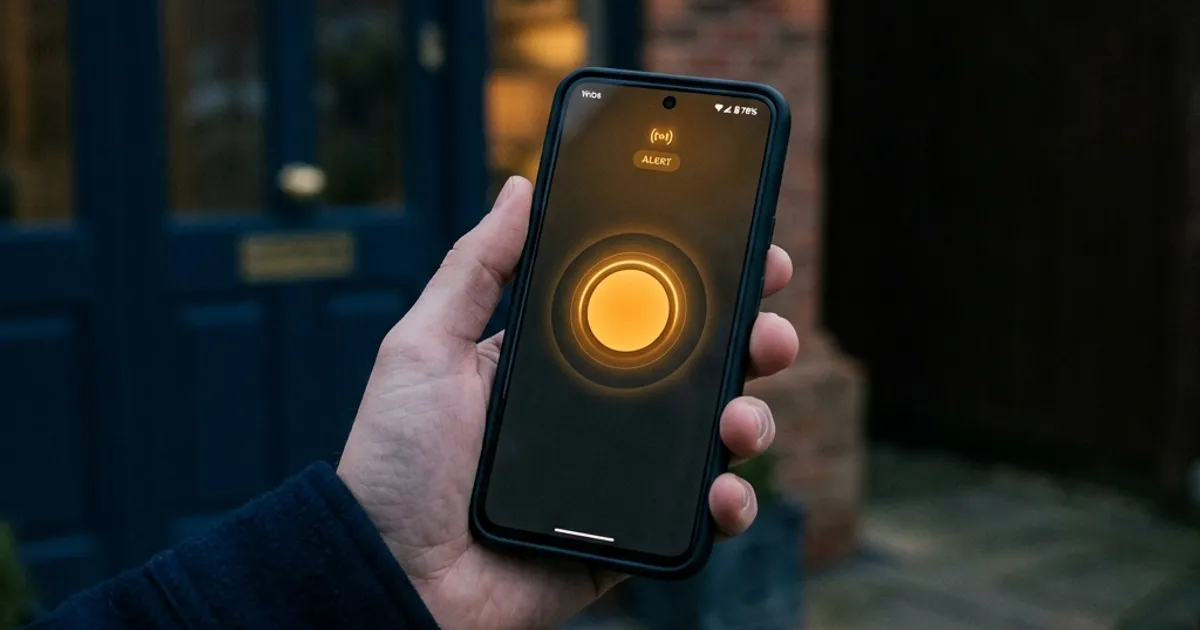
Where it started: hardware-led personal safety
The Sentry launched in the UK in 2021, but not in the form it takes today. The original product was a piece of hardware that fitted into a smartphone’s charging port, paired with a companion app. The hardware was the product; the app was there to drive it.
The idea was straightforward: removing the device from the charging port, as would happen if someone grabbed the phone, or the phone was stolen, triggered the safety features built into the app. It doubled as phone-theft prevention and a personal safety trigger in one small piece of kit.
At that stage The Sentry was a B2C product, aimed squarely at end users: commuters, students, anyone who wanted an extra layer of protection built into the device they already carried.
The discovery that changed the direction
As the product developed, a different and more pressing need became clear: personal safety and the prevention of harassment for staff at work was a bigger problem than the consumer market The Sentry had originally been built for.
That realisation drove the pivot from B2C to B2B — from a product for individuals to a platform for employers whose staff work face-to-face with the public and, as a result, carry a higher risk of harassment from third parties.
Removing the hardware from the equation didn’t remove the safety features. It simply meant those features, now the core of the app, needed a new home and a new focus.
Why property: 18 years as a letting agent
The property sector wasn’t a market The Sentry stumbled into. Stuart & Rebecca Evans, founders of The Sentry, spent 18 years running their own letting agency before building the platform, and saw first-hand the daily fear that many staff in the industry carry, and the almost complete absence of safety tools or equipment to address it.
Employers already have a duty to take reasonable steps to protect staff from third-party harassment under the EHRC’s 8-step guidance. In practice, many don’t. Where a process exists at all, it typically asks a member of staff being harassed on a viewing to phone the office and use a safe word, or to unlock their phone and start typing a message or dialling a number.
From direct experience, Stuart & Rebecca knew that these processes fall apart under pressure. When someone is panicked, tasks that sound simple — remembering a phrase, unlocking a phone, composing a message — become too complex to execute. The most anyone can realistically manage in that moment is pressing a button.
That single insight shaped The Sentry as it exists today: a standalone app, built specifically for staff and businesses in the property industry, designed around what a person can actually do when they’re frightened, not what a policy document assumes they can do.
MWC Barcelona: proving the technology had commercial depth
Before the platform’s full pivot to the property sector, The Sentry exhibited at 4YFN (4 Years From Now) at MWC25 Barcelona — the startup summit that runs alongside Mobile World Congress, Europe’s largest mobile technology conference. The MWC exhibitor listing referenced the platform’s focus on mobile phone safety, with thesentry.co.uk listed as the developer contact.
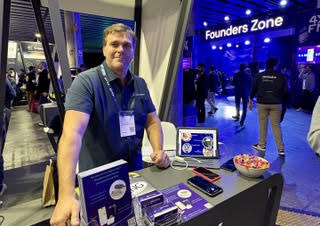
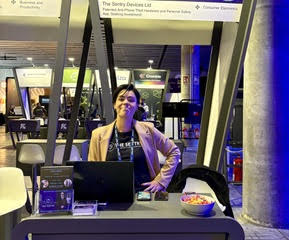
4YFN is one of the largest startup gatherings in Europe, focused on mobile-first technology businesses. Being selected to exhibit as a UK company at MWC 2025 placed The Sentry alongside some of the most ambitious mobile technology startups globally, and confirmed that the underlying technology had commercial depth well beyond a single consumer device.
The pivot: purpose-built for UK property
UK estate agents and lettings negotiators routinely conduct solo viewings in unoccupied properties with clients they have never met. The combination of isolation, physical vulnerability and inadequate emergency tools and processes — particularly for female negotiators — created exactly the environment where a purpose-built professional safety platform was needed.
The pivot wasn’t a departure from the original mission of protecting people. It was a sharpening of it, built around what the founder had lived through in the industry.
This meant:
- Check-in functions — daily, timed check-ins calibrated by each team of staff to suit their needs
- Employer-facing compliance tools — an admin dashboard giving agencies real-time visibility of their field team
- A genuine one-button response — no safe words, no typing, no multi-step process. Just a button a person can press under real stress.
- Legislative alignment — compliance documentation and app features that are mapped to the EHRC 8-step guidance and to incoming employment law reforms.
- One-hour deployment — the property sector is dominated by SME agencies without dedicated IT teams. The platform had to be operational in under an hour, with zero hardware.
Why the law is catching up
Employers should already be taking reasonable steps to prevent third-party harassment of staff under the EHRC 8-step guidance. Many aren’t. This year, the government is updating employment law with reforms that make employers directly liable for third-party harassment of staff — a change that puts a legal weight behind an obligation that should already have been front of mind.
That reform sharpens the issue for property businesses specifically — see our breakdown of the ERA 2025 harassment law changes for the detail. The Sentry doesn’t just give staff a way to raise the alarm in an emergency; it gives businesses a documented, auditable system they can point to as evidence that they took all reasonable steps to protect their people. In an industry where a single unaccompanied viewing can turn into an incident, that evidence matters, both for the person involved, and for the business defending itself against a compensation claim if something does go wrong. The same principles apply to surveying and architecture firms sending staff to unfamiliar sites alone.
What the platform provides today
The current platform still carries the DNA of the original idea — fast, mobile-first, no hardware required — but it has been rebuilt, iteration by iteration, around the realities of property work and the compliance requirements that come with it:
- One-touch panic alarm with automatic video capture — creates tamper-proof incident evidence, not just an audible alert.
- Real-time GPS monitoring via admin dashboard — gives employers verifiable oversight of field staff during solo viewings.
- Private, accessible incident reporting channel — supports Step 4 of the EHRC 8-step guidance and new laws around sexual harassment being covered under the whistleblowing act.
- Compliance documentation pack — policy templates and risk assessment frameworks included at no additional cost.
- Full encrypted audit trail — usable as evidence should an incident proceed to an employment tribunal or compensation claim.
A self-funded, independent business by design
See pricing for current plans. The Sentry has been self-funded since the business was founded in 2019, and that independence is a deliberate choice, not a limitation. Venture-backed safety platforms face pressure to expand pricing, add hardware requirements, and extend contract lock-ins to satisfy investor return timelines. The Sentry answers to its users instead — accessible pricing, no lock-in, built by someone who has done the job the platform is designed to protect.
Necessity was the mother of invention here. The need was for more proactive, serious staff protection — one that also protects the business itself from litigation — and that’s what The Sentry set out to build.