
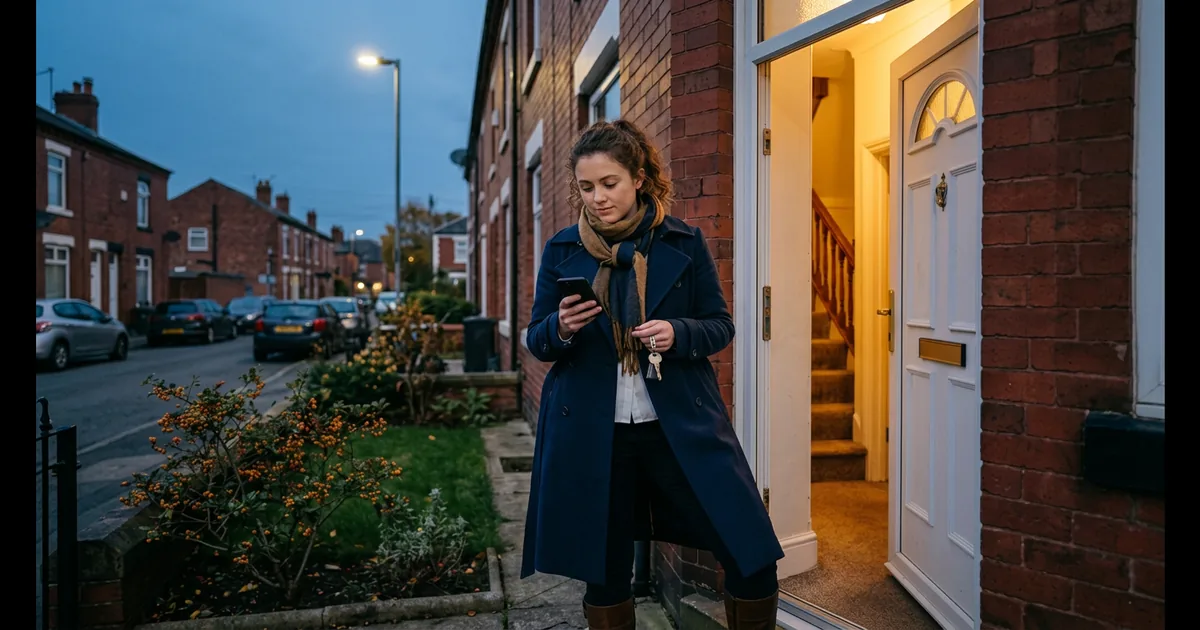
The clocks went back at 2am on Sunday 25 October, with sunset in London expected before 5pm around that date. Five days later, on Friday 30 October, employers became liable for harassment of staff by third parties, such as a viewer, within the Equality Act’s harassment provisions unless they have taken all reasonable steps to prevent it. For an estate or letting agency, the dark evening viewing season is a sensible time to check what is actually in place.
None of this means evening viewings must stop. It means the time of day belongs in your risk assessment, with a decision recorded against it.
In Short: The clocks went back on Sunday 25 October, and third-party harassment liability came into force on Friday 30 October. Employers are liable for harassment within the Equality Act’s harassment provisions unless they took all reasonable steps to prevent it. Darker evenings make solo viewings a clearer risk to assess. Review time of day in your risk assessment, add check-ins and an alarm for evening viewings, and record your decisions.
Key Facts
- The clocks went back at 2am on Sunday 25 October 2026, with sunset in London expected before 5pm around that date. They go forward again on 28 March 2027.
- Since Friday 30 October 2026, employers are liable for third-party harassment of staff within the Equality Act’s harassment provisions, such as by a viewer, unless they took all reasonable steps to prevent it.
- Acas says what is reasonable depends on factors such as the kind of work, and means doing what is possible with the resources available. For higher-risk environments, steps are more likely to include safety equipment such as personal alarms.
- Acas’s sexual harassment guidance lists meeting clients or service users alone among the higher-risk factors to consider in a risk assessment.
- HSE’s lone working guidance treats people working outside normal hours as a lone-working situation, and says risk assessments should be reviewed when working practice changes significantly.
- Propertymark’s recently refreshed lone-working guidance for agents lists out-of-hours appointments among the factors to consider, and says every agency should have a reliable system recording where lone workers are, who they are meeting and when they are expected to check in.
- In a 2026 SoloProtect survey of 2,500 frontline lone workers across sectors, 56% reported verbal or physical abuse in the previous 12 months. This is vendor research, not an estate-agent-specific rate.
Why the Clock Change Matters for Viewings
Most agencies run viewings after work, because that is when buyers and tenants are free. Until the clocks go forward again in March, many of those slots will fall in the dark, often in vacant properties and often with a viewer your negotiator has never met.
HSE’s guidance on lone working lists people working on their own outside normal hours as an example of lone working. It expects employers to assess the risk and to review the assessment periodically and when working practice changes significantly. Darker evenings do not change how you work, but they do change the conditions you work in, and a review is a reasonable response.
Propertymark’s recently refreshed personal safety and lone-working guidance for agents makes the same point in sector terms. Its list of factors to weigh in a risk assessment includes out-of-hours appointments, isolated locations, unexpected attendees and existing disputes. It also says every agency should have a reliable system for recording where lone workers are, who they are meeting and when they are expected to check back in.
What the New Duty Says About Higher-Risk Work
Acas’s guidance on third-party harassment explains the liability in force since 30 October: employers are liable for harassment by a third party within the Equality Act’s harassment provisions unless they took all reasonable steps to prevent it. This covers sexual harassment and harassment related to the protected characteristics covered by those provisions. A third party can be anyone a worker deals with through work. Separately, the preventative duty for sexual harassment has required all reasonable steps since the same date. Acas’s examples of steps include regularly assessing the risk and acting on it, and having a policy. For higher-risk environments, it says steps are more likely to include appropriate safety equipment, for example personal alarms.
Acas’s separate guidance on sexual harassment lists meeting clients or service users alone as a higher-risk factor. A solo viewing fits that description exactly. It is reasonable to argue that an evening viewing of a vacant property, after dark, sits near the top of many agencies’ own risk rankings. That is a judgement for each agency’s assessment, not a rule, which is why the assessment matters.
The wider lone-worker picture helps explain why this is worth doing properly. A 2026 SoloProtect survey of 2,500 frontline lone workers across sectors found 56% reported verbal or physical abuse in the previous year. The survey is vendor research and does not establish the rate for estate agents or for evening viewings.
Could you show what your agency changed for the dark evenings? See how The Sentry gives you the check-ins, the alarm and the dated record behind them: Book a free demo.
What to Do Now That the 30 October Changes Are in Force
None of this needs a large budget. It needs someone to look at the diary, make decisions and write them down.
- Look at the diary for the week ahead and list every viewing after about 4pm, marking vacant properties and first-time viewers.
- Add time of day to your viewing risk assessment, and date the update.
- Decide which viewings move to daylight, which get a second person and which stay as they are, and write down why.
- Make sure every evening viewing has a check-in time and a defined response if it is missed.
- Check that every negotiator can raise an alarm without speaking or typing, and test it this week.
- Remind staff in writing that they can end or rearrange a viewing if they feel unsafe.
Write It Down
The new duty turns on what you did, not on what you meant to do. A dated update to the risk assessment, a note of which viewings you moved or protected, the check-in records and a log of any incident are what you would show if you were ever asked. If you decide a step is not reasonable for your agency, it is sensible to record why.
How The Sentry Helps
Software does not replace the risk assessment or the decision about which viewings to move. Those are yours. What The Sentry adds is the live cover and the record: timed check-ins that can be escalated if one is missed, a one-touch alarm, loud or silent, that shares the agent’s location, confidential incident reporting, and a Compliance Portal that timestamps what was in place and what was used. That record is what you would point to for the first week of dark evenings, and every week after it.
Frequently Asked Questions
When did the clocks go back in 2026, and why does it matter for viewings? The clocks went back at 2am on Sunday 25 October 2026, when British Summer Time ended. With sunset in London expected before 5pm around that date, evening viewings after work will mostly be in the dark until the clocks go forward again on 28 March 2027. It matters because third-party harassment liability came into force five days later, on 30 October, and now applies alongside the strengthened sexual harassment preventative duty.
Are evening viewings more dangerous than daytime ones? There is no single published statistic I would quote to prove it. What can be said is that HSE treats working outside normal hours as a lone-working situation, Propertymark lists out-of-hours appointments among the factors agencies should weigh, and Acas lists meeting clients alone as a higher-risk factor. All three point to time of day and working alone being things a risk assessment should consider, and to a decision being recorded either way.
Does the new duty require agencies to give staff personal alarms? No, nothing in Acas’s guidance makes alarms compulsory. It says what is reasonable depends on factors such as the kind of work and the resources available, and that for higher-risk environments steps are more likely to include safety equipment such as personal alarms. For solo evening viewings, an alarm is the kind of step an agency should expect to be asked about.
Should we stop doing evening viewings? Not necessarily. The aim is to assess the risk and take proportionate steps. Options include moving vacant-property viewings to daylight, sending a second person, adding a check-in with a defined response, and confirming staff can end a viewing if they feel unsafe. Whatever you decide, record it.
What should we record to show we took all reasonable steps? Keep a dated update to your risk assessment showing time of day was considered, a note of the decisions you made about particular viewings, your check-in records, and a log of any incidents and the response. If you decide a step is not reasonable for your agency, write down why. That record shows what you actually did, which is what the duty turns on.
Rebecca Evans is COO of The Sentry, specialising in staff safety in the property sector.