
Two new laws, one shift pattern
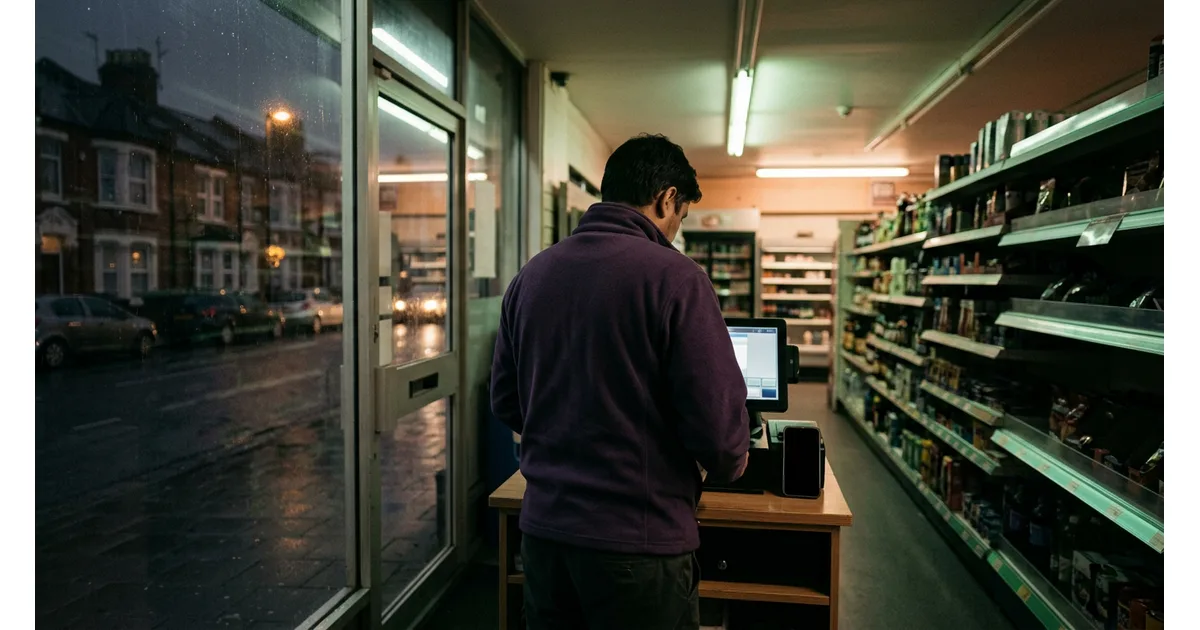
Retail lone worker safety now sits under two new laws at once. The Crime and Policing Act 2026 creates a standalone offence of assaulting a retail worker, and since 30 October 2026 the Employment Rights Act 2025 makes employers liable when customers harass staff unless the employer took all reasonable steps to prevent it. Both bite hardest on the shift where one colleague opens, runs or closes the shop alone.
The assault offence punishes the attacker. The harassment duty asks what you, the employer, did beforehand. For a shop owner or area manager, that second question is the one that lands on your desk.
Summary: The Crime and Policing Act 2026 created an offence of assaulting a retail worker (awaiting commencement at the time of writing), and since 30 October 2026 employers face liability for third-party harassment unless they took all reasonable steps. Retailers with single-staffed shifts should risk assess them, record incidents and give staff a fast, discreet way to raise an alarm.
Key Takeaways
- The Crime and Policing Act 2026 received Royal Assent on 29 April 2026. The new offence of assaulting a retail worker carries up to six months in prison and/or an unlimited fine, with a presumption of a Criminal Behaviour Order on first conviction (Home Office factsheet).
- The retail assault offence was not in the first commencement regulations (in force 29 June 2026) and was still awaiting commencement at the time of writing.
- Sections 20 and 21 of the Employment Rights Act 2025 took effect on 30 October 2026 (SI 2026/1065): employers must take “all reasonable steps” to prevent sexual harassment and face separate liability for third-party harassment, such as by customers, unless they took all reasonable steps to prevent it.
- The British Retail Consortium (BRC) Crime Report 2026 recorded around 1,600 incidents of violence and abuse against retail workers a day, including 118 involving physical violence and 36 involving a weapon.
- Employment tribunal claims now have a six-month time limit for most claims, from 1 October 2026.
What the new shopworker assault offence does
The Crime and Policing Act 2026 makes assaulting a retail worker a specific criminal offence in England and Wales. Before this, an assault on shop staff was charged as common assault or actual bodily harm, and it disappeared into general police statistics.
According to the Home Office’s retail crime factsheet, the new offence carries a maximum of six months in prison and/or an unlimited fine, and courts are expected to impose a Criminal Behaviour Order on first conviction. That order can, for example, keep a repeat offender away from your premises. The government has also said the offence should help assaults on retail workers to be recorded separately, so the real scale becomes visible.
The Act also ends the treatment of shop theft under £200 as a summary-only offence. That matters for safety because, as the shopworkers’ union Usdaw has pointed out, around two thirds of attacks on retail staff are triggered by theft or armed robbery.
The timing caveat. Royal Assent is not the same as being in force. The first commencement regulations, which switched on a large block of the Act on 29 June 2026, did not include the retail crime sections. At the time of writing, the assault offence was still waiting for its own commencement regulations, so check legislation.gov.uk before telling staff it is live.
What this means for retailers: the offence will make prosecution clearer, but only if there is evidence. A shop worker alone at 10pm, with no witness and a CCTV camera pointing at the door rather than the till, may struggle to give police what they need.
The 30 October employer duty is the one aimed at you
The criminal offence targets the attacker. The Employment Rights Act 2025 targets the employer, and its key harassment provisions are now in force. The Employment Rights Act 2025 (Commencement No. 6 and Transitional and Saving Provisions) Regulations 2026 (SI 2026/1065), made on 1 October 2026, brought sections 20, 21 and 22 into force on 30 October 2026. See also our guide to the existing worker protection duty.
Two changes matter for shops:
- Section 20 raises the existing duty under the Equality Act 2010 from taking “reasonable steps” to taking “all reasonable steps” to prevent sexual harassment of employees.
- Section 21 makes an employer liable where a third party, such as a customer, harasses an employee in the course of their employment and the employer failed to take all reasonable steps to prevent it. This covers harassment related to relevant protected characteristics, including race, religion or belief, sex, sexual orientation and disability, not just sexual harassment.
Keep the two frameworks distinct. General aggression with no link to a protected characteristic, such as a shoplifter shoving a cashier, is not a harassment claim under the Equality Act. It is health and safety territory under the Health and Safety at Work etc. Act 1974 and the Management of Health and Safety at Work Regulations 1999, which require you to assess and control the risk of violence to staff. See our lone worker compliance guide. Racist abuse from a customer at the till, on the other hand, can now found a standalone tribunal claim against you.
Government regulations defining “all reasonable steps” are expected later, not before 2027. Until then, tribunals will judge each employer on its own circumstances.
What this means for retailers: with the changes now in force, “we told staff to call the police” is unlikely to be enough on its own. You need to show a risk assessment, a policy that names customer harassment, training, and a reporting route your staff actually use.
Why the single-staffed shift is where both laws bite
Retail crime has eased slightly but remains far above pre-pandemic levels. The BRC Crime Report 2026, published in February 2026, recorded around 1,600 incidents of violence and abuse a day, down from about 2,000 the year before but well above the 455 a day recorded before the pandemic. Physical violence was largely unchanged at 118 incidents a day, with 36 a day involving a weapon.
The union picture is starker. Usdaw’s 2025 survey of 8,980 retail staff found that 78% had been verbally abused, 54% threatened and 11% assaulted during the year.
For smaller shops, the Association of Convenience Stores (ACS) Crime Report 2026 estimates more than 67,000 incidents of violence against shopworkers and just over 950,000 incidents of verbal abuse in the convenience sector over the year.
None of these surveys isolates lone shifts, and no reliable UK figure on retail lone worker safety does. But the risk factors overlap with the conditions of a single-staffed shift:
- Opening and closing, when the shutters are half up and the street is quiet.
- Cash handling, cashing up the till or walking takings to the bank.
- Age-restricted sales, where refusing alcohol, tobacco or vapes can trigger aggression.
- Challenging a shoplifter with no colleague to call over.
- Keyholder call-outs, when a manager is phoned at 2am because the alarm has gone off.
What this means for retailers: your duty of care to a colleague working alone is the same as to a full team, but the controls are different. Your risk assessment should treat a single-staffed shift as a distinct risk, not just a normal shift with fewer people on it.
What “all reasonable steps” could look like in a shop
There is no statutory checklist yet, but the Equality and Human Rights Commission (EHRC) 8-step guidance on preventing sexual harassment, and its checklist (originally written for hospitality and late-night venues but explicitly adaptable to other customer-facing sectors), point the way. For a retailer with lone shifts, a defensible position is likely to include:
- A risk assessment that names lone shifts. List when they happen, which stores and which tasks, and record what you have done about each.
- A policy that covers customers. State that harassment by customers will not be tolerated, how staff report it, and what will happen next.
- Training on safe challenge. Staff should know they are not expected to tackle a thief, and when to step back.
- Visible deterrence. Signage, CCTV positioned on the till, and refusing service to repeat offenders.
- A reliable reporting route. One staff will use at the end of a long shift, including a private one.
- A way to summon help fast. One that works when the worker cannot make a phone call, and that produces a record.
- Follow-up and review. Act on each incident, support the employee, and update the assessment.
Note the overlap with the new criminal offence. The evidence that helps police prosecute an attacker is often the same evidence that helps you show a tribunal you took all reasonable steps. The cost of an employment tribunal harassment claim is one reason to preserve that record.
Running stores with single-staffed shifts? See how The Sentry gives lone shopworkers a discreet panic alarm and an evidence trail. Book a free demo.
What this means for retailers: documentation is the test. If a step is not written down and dated, assume a tribunal will treat it as not taken.
How The Sentry helps protect retail lone workers
The Sentry is a smartphone-only lone worker safety app, built for staff who work alone with no colleague in earshot. For retail lone worker safety, the most relevant features are:
- Panic alarms from the home screen. A one-touch widget raises an alarm with no unlocking the phone, no opening the app (the phone itself must already be unlocked). A silent alarm records audio and video, useful when a confrontation is building at the till; a loud alarm sounds a siren and records video. For more on selecting alarms, see what UK lone workers actually need from panic alarm apps.
- Instant alerts with live location. Nominated responders, such as the store manager, the area manager or a nearby branch, see the worker’s location on a map and can mark themselves as responding.
- Check-in timer for opening, closing and banking. A worker starts a timed check-in before cashing up or walking takings to the bank. If they do not check in, it escalates automatically.
- Fake incoming call. A genuine native ringtone gives a worker a reason to step away from an escalating customer.
- Anonymous incident reporting. Staff can log abuse, including racist or sexual remarks, with notes, photos, time and location. Reports can be submitted anonymously and leave no trace on the device, supporting the reporting step in the EHRC guidance.
- Manager portal. A dated record of alarms, check-ins and reports across every store, which is exactly the kind of lone worker protection evidence an “all reasonable steps” defence depends on.
An honest note on response. The Sentry alerts the people you nominate; it is not a monitored alarm receiving centre service with direct police dispatch. It works best where a manager, colleague or neighbouring store can respond quickly, and staff should still call 999 in an emergency.
For a fuller view of how the app fits shops and branch networks, see our page on the lone worker app for retail and high street teams.
Key dates
- 29 April 2026: Crime and Policing Act 2026 receives Royal Assent.
- 29 June 2026: first commencement regulations bring parts of the Act into force (not the retail assault offence).
- 1 October 2026: employment tribunal time limit rises from three to six months for most claims.
- 30 October 2026: “all reasonable steps” sexual harassment duty and third-party harassment liability took effect (SI 2026/1065).
- To be confirmed: commencement of the retail worker assault offence.
- Expected 2027: regulations on what counts as “all reasonable steps”.
FAQ
Is assaulting a shop worker now a separate crime in England and Wales? The Crime and Policing Act 2026 creates a standalone offence of assaulting a retail worker, with a maximum of six months in prison and/or an unlimited fine. However, the offence needs its own commencement regulations, and it was not among the provisions brought into force on 29 June 2026. Until it is commenced, assaults on shop staff are still charged as common assault or actual bodily harm. Check legislation.gov.uk for the current position.
Am I liable if a customer harasses one of my shop staff? Since 30 October 2026, yes, potentially. Section 21 of the Employment Rights Act 2025 makes an employer liable where a third party harasses an employee in the course of their employment and the employer did not take all reasonable steps to prevent it. This covers harassment related to protected characteristics such as race, sex or religion, not just sexual harassment, and it can be brought as a standalone tribunal claim.
Do I have to stop staff working alone in my shop? No law bans lone working in retail, but retail lone worker safety is still a legal duty. The Health and Safety at Work etc. Act 1974 and the Management of Health and Safety at Work Regulations 1999 require you to assess the risk of violence and put proportionate controls in place. For a single-staffed shift, that usually means a risk assessment, training, a way to summon help and a reporting route, rather than an outright ban.
What counts as “all reasonable steps” for a retailer? The government has not yet defined it, and regulations are not expected before 2027. Tribunals will look at what a business of your size and risk profile could reasonably have done. A written risk assessment, a policy that covers customers, training, a working reporting route and a reliable way for lone staff to raise an alarm are all likely to be relevant.
Is a lone worker safety app enough to meet the new duty? No single tool meets the duty on its own. A lone worker safety app such as The Sentry supports several steps, including fast alarms, evidence capture, incident reporting and a dated record, but it sits alongside your policy, training and risk assessment. Staff should still call 999 in an emergency.
Stuart Evans
Ready to protect your team? Single-staffed shifts are where the new assault offence and the 30 October harassment duty meet, and where retail lone worker safety is tested. The Sentry gives your shopworkers a discreet alarm and gives you the evidence trail to show you acted. Book a free demo → | See pricing →