
Awaab’s Law and Lone Worker Safety in Social Housing
Awaab’s Law now gives social landlords fixed legal deadlines to investigate hazards in tenants’ homes: 24 hours for emergencies, 10 working days for significant damp and mould. Almost everything written about it so far treats it as a repairs and compliance problem — get the diagnosis right, hit the deadline, document it. What’s had far less attention is what those deadlines mean for the person sent to meet them. Tighter timeframes mean more urgent, less plannable visits, often solo, often to a property the visiting officer or surveyor has never been to before. That’s a lone worker safety question as much as an operations one, and it deserves the same attention.
What Awaab’s Law actually requires, and by when
Awaab’s Law — formally the Hazards in Social Housing (Prescribed Requirements) (England) Regulations 2025, made under the Social Housing (Regulation) Act 2023 — is being introduced in phases. The government’s guidance sets out the current timeframes and the scope of each phase.
Phase 1, in force since 27 October 2025, requires social landlords to investigate emergency hazards and make them safe within 24 hours. Damp and mould hazards that present a significant risk of harm must be investigated within 10 working days, with a written summary of findings normally sent to the resident within 3 working days of the investigation concluding. Where a significant hazard is confirmed, the landlord must make the property safe within 5 working days of the investigation.
Phase 2, confirmed for 30 November 2026, extends the same fixed timeframes to a wider range of significant hazards: excess cold and heat, falls (including on stairs and between levels), structural collapse, fire and explosions, electrical hazards, and domestic hygiene and food safety. Phase 3, due in 2027, will extend requirements to the remaining hazards defined by the Housing Health and Safety Rating System, excluding overcrowding.
Landlords may have a defence if they can show they took all reasonable steps to comply but couldn’t for reasons outside their control — refused access, for example. In practice, that pushes teams toward attempting access promptly and repeatedly rather than waiting for a convenient slot, which tends to mean more visits, not fewer, and less control over when they happen.
Why tighter deadlines mean more lone visits, not fewer
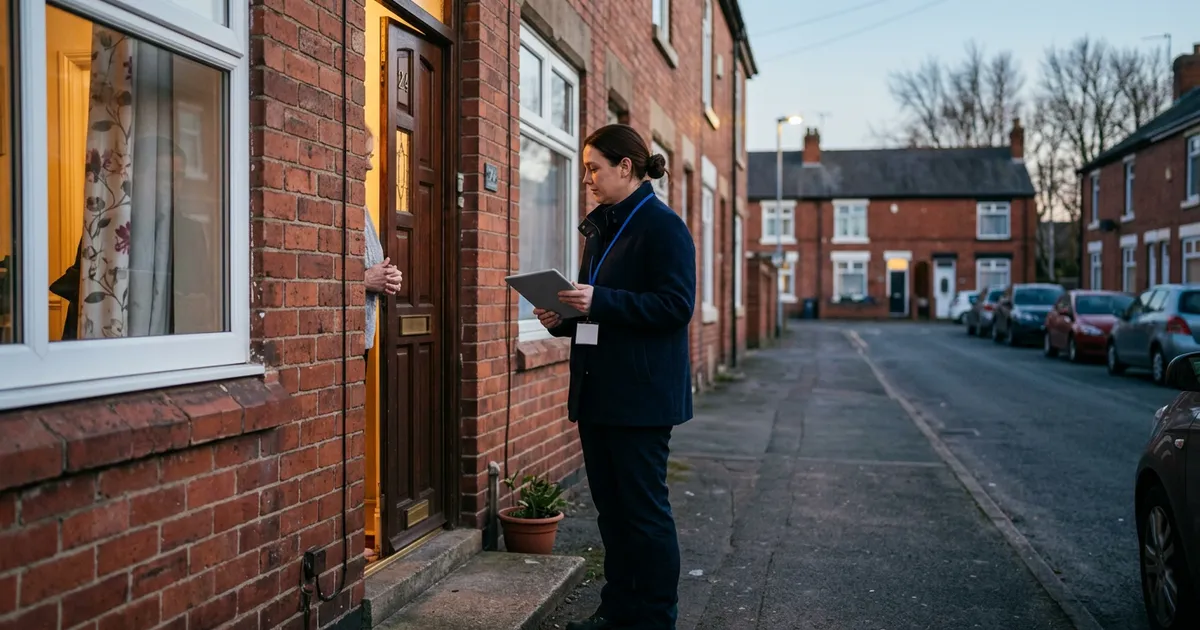
Picture a fairly ordinary scenario under Phase 1: a tenant reports what sounds like black mould on a Thursday evening. If it reads as posing a significant risk of harm, the 10-working-day clock starts. If it reads as an emergency, the landlord has 24 hours, full stop. Either way, someone — often a technical officer or surveyor working alone — needs to get out to that property fast, to an address they may not know, at a time dictated by the deadline rather than a pre-planned round.
Some landlords are visibly resourcing up for this. Stroud District Council, which manages around 5,000 homes, has publicly said it recruited additional surveyors, a multi-trade operative and extra administrative staff, and invested in new software specifically to meet Awaab’s Law. Not every landlord is in that position. UNISON’s Housing Worker Survey found that 57% of housing staff are asked to take on duties outside their remit, and 45% say they lack the training their job actually needs — a workforce already stretched before a new statutory deadline lands on top. A team under pressure to hit a legal deadline with too few people is exactly the situation most likely to send someone out alone, at short notice, without a proper lone-working plan behind them.
The lone worker risk this sits on top of
Awaab’s Law doesn’t create lone worker risk in housing — it increases the frequency and urgency of visits that were already among the sector’s most exposed. UNISON’s Housing Worker Survey 2024–25, based on over 1,100 responses and published in October 2025, found that 72% of housing workers had experienced violence at work in the past year. Of those, 40% said they weren’t adequately supported afterwards, and half said their employer had taken no steps to prevent it happening again.
Housing teams already recognise the risks of entering homes alone and delivering difficult news, including during ASB and eviction notice visits. A hazard investigation into someone’s home, arranged reactively under legal time pressure, can involve the same factors: an unfamiliar address, an anxious or frustrated household, and a visiting officer working alone.
What the Safety and Quality Standard expects you to evidence
There’s a second regulatory thread pulling in the same direction. The Regulator of Social Housing’s Safety and Quality Standard, in force since 1 April 2024, specifically expects landlords to hold an accurate record at an individual property level of the condition of their homes, based on a physical assessment, kept up to date. Combined with Awaab’s Law, that’s two separate regulatory pressures both pointing at well-documented investigations and physical assessments. A visit log can help show who attended and when, but it cannot replace the competent assessment and accurate property-level condition record the standard requires. Our guide to a housing-specific lone working policy covers how to keep those records connected without confusing the two duties.
How The Sentry helps
Most lone worker apps are built around a panic alarm and a check-in timer, and The Sentry has both: a one-touch alarm with automatic video capture (and audio on the silent alarm) for anyone who feels unsafe during a visit, and a check-in timer with automatic escalation to nominated contacts if a visit overruns without contact. Teams can choose appropriate monitoring for each visit based on their own risk assessment.
The feature that fits Awaab’s Law particularly well is The Sentry’s in-app incident reporting. It captures written notes — typed, or dictated straight into the note using the phone’s own microphone — alongside exact location, time and date, and photos — all logged together, from the phone the employee is already carrying. Each report is customisable by type — confrontation, property damage, or health hazard, for example — and routed to the right recipient, who can then judge urgency from the title alone, without needing to open the full report first: a broken window carries different weight than black mould or a broken stair, and the reason chosen by the person submitting the report makes that clear at a glance. For something serious like a damp and mould investigation, that can provide a time-stamped, geo-located photographic record from the visit rather than notes reconstructed from memory afterwards. Shared with the appropriate housing team, it can support the investigation and preparation of the tenant’s written summary, but does not itself replace a competent hazard investigation or the separate property-level record required by the Safety and Quality Standard. If the same visit turns confrontational, a report can capture what was said, where and when; a triggered panic alarm also records video, and the silent alarm records audio. The same visit can therefore inform both the property’s follow-up and the worker’s safety response, with each handled through the right process. See our wider lone worker compliance guide for employers’ duties.
If your teams are covering more urgent, less scheduled visits under Awaab’s Law, it’s worth seeing how a check-in timer and incident reporting actually work together in practice — book a free demo.
Key dates and actions
- 27 October 2025 — Phase 1 live: 24-hour emergency hazard response; 10-working-day investigation for significant damp and mould hazards.
- 30 November 2026 — Phase 2: significant excess cold/heat, falls, structural collapse, fire and explosions, electrical and domestic hygiene hazards added.
- 2027 — Phase 3: remaining HHSRS hazards, excluding overcrowding.
- Now — worth reviewing whether your lone working policy has caught up with how Awaab’s Law has actually changed visit scheduling, not just repair timelines.
FAQ
Does Awaab’s Law affect how housing staff work, not just repair timelines? Yes, indirectly but materially. The law sets fixed deadlines for landlords — 24 hours for emergency hazards, 10 working days to investigate significant damp and mould — but meeting those deadlines in practice means more reactive, less plannable visits, often solo, into homes that haven’t necessarily been risk-assessed in advance.
What counts as an “emergency hazard” under Awaab’s Law, and how quickly must it be investigated? Government guidance defines it as a hazard posing an imminent and significant risk of harm to a tenant’s health or safety. Since 27 October 2025, landlords must investigate and make it safe within 24 hours of becoming aware of it.
Do housing officers or surveyors have to visit alone under the new deadlines? No. Awaab’s Law sets deadlines for landlords, not a requirement for staff to attend alone. Where visits are carried out solo, employers must assess and manage the risks under the Management of Health and Safety at Work Regulations 1999, including whether a two-person visit is needed.
What should a housing provider’s lone working policy cover for Awaab’s Law visits? At minimum: how urgent or unscheduled visits get risk-assessed before someone attends alone, how the visiting officer can raise an alert if a visit turns confrontational, and how arrival, departure and time on site are recorded. Visit records can support, but not replace, the separate property-condition assessment required by RSH’s Safety and Quality Standard.
Can incident reporting help meet both regulatory evidence and staff safety needs at once? Yes — the two purposes reinforce rather than compete with each other. A time-stamped, geo-located record with photos or a dictated note, taken during the visit, can inform a landlord’s hazard investigation and also document safety concerns for the person who visited. It does not on its own fulfil the landlord’s investigation, repair or property-record obligations.
This article was written by Stuart Evans, co-founder of The Sentry.