
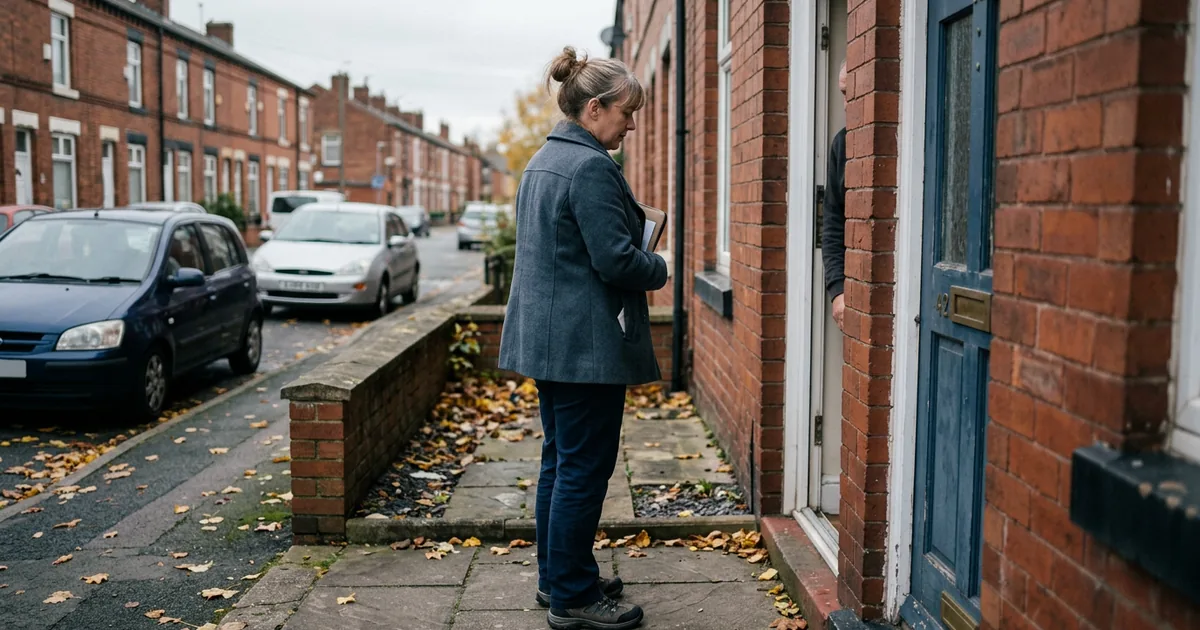
The visit that changes everything
A social housing officer knocks on a door to serve a Notice Seeking Possession. An ASB case officer arrives to deliver a final warning about a noise complaint. Neither visit looks unusual on a diary sheet. Both are, by the sector’s own data, among the highest-risk things a housing worker does alone.
UNISON’s Housing Worker Survey 2024–25, published in October 2025 with more than 1,100 responses, found that 72% of housing workers experienced violence at work in the past year. Half said their employer had taken no steps to prevent a repeat incident. This isn’t a story about a dangerous minority of addresses. It’s a story about a specific kind of visit, repeated thousands of times a year across every housing association and council housing team in the country: the one where the officer is there to deliver news the person on the other side of the door does not want to hear.
Why this task, specifically
Risk assessment in most housing teams still works property-first: an address gets flagged if there’s a known history of aggression, and everything else is treated as routine. That approach misses the pattern the data actually shows. It isn’t only the “known risk” addresses that produce violent incidents. It’s the moment a visit turns confrontational, and that moment is far more predictable by task than by address.
The British Safety Council has named this scenario directly in its own guidance on protecting lone and vulnerable workers, citing “a housing officer delivering bad news to a difficult tenant” as a case where a discreet way to raise an alarm matters, and identifying eviction notices specifically as a common trigger point where verbal hostility can escalate quickly into physical threats. That isn’t a one-off anecdote. It reflects something every ASB or income team already knows from experience: a resident who has been perfectly pleasant on three previous visits can react very differently on the visit where they’re served a notice, warned about their behaviour, or told the tenancy is ending.
Common misconception: that risk assessment can be done once, at the point a tenancy or ASB case opens, and then left alone. In practice, the type of visit changes the risk profile far more than the history of the address does. A first-contact welfare check, a routine repair appointment, and a notice-serving visit to the same door carry three different risk levels, even on the same day.
What the law actually requires
The lone worker compliance duty here isn’t new or sector-specific, which is part of why it’s easy to under-prioritise. The Health and Safety at Work etc. Act 1974 (s2 and s3) and the Management of Health and Safety at Work Regulations 1999 (regulation 3) require employers to assess and manage foreseeable risks before someone is allowed to work alone, full stop. HSE’s own guidance on lone working is unambiguous that a mobile phone by itself is not an adequate control measure once a violence risk is foreseeable, and a scheduled eviction notice or ASB warning is about as foreseeable as a risk gets.
That means a lone working policy that treats “serving a notice” the same way it treats “collecting a rent payment” is not meeting the duty of care the law sets, even if a risk assessment technically exists on file. The question isn’t whether a policy exists. It’s whether the policy actually escalates precautions for the specific visits where the data says something is more likely to go wrong.
Who carries this risk
- ASB case officers delivering warnings, acceptable behaviour contracts, or notices connected to enforcement action.
- Housing officers serving Notices Seeking or Notices of Possession, often the final step before a legal process the resident may already feel is unfair.
- Neighbourhood and patch officers attending a property specifically because a complaint has already escalated once.
- Income/rent officers, where the visit combines a financial conversation with the same emotional volatility.
Nearly three-quarters of UNISON’s respondents work for councils rather than standalone housing associations, so this isn’t a risk confined to any one type of landlord. Any team that serves notices or manages ASB casework alone carries it, regardless of organisation size, and the lone worker compliance duty is the same either way. Similar visit-specific risks apply to local authority social work teams.
What good practice looks like
The gap most teams have isn’t a missing policy. It’s a policy that doesn’t distinguish between visit types, and a lone worker safety process that relies on the officer remembering to call in rather than a system that tracks them automatically. Closing that gap means:
- Flagging notice-serving and ASB enforcement visits as elevated-risk by default, not only when the specific address has a known history.
- Giving the officer a way to raise an alarm that doesn’t require pulling out a phone, unlocking it, and opening an app in the middle of a confrontation.
- Making sure someone (not just a phone log, but a person) knows where the officer is and what time they’re expected back.
How The Sentry helps
The Sentry is built for exactly this kind of task-based risk, not just address-based risk. A housing officer heading out to serve a notice can set a check-in timer for the visit; if they don’t check in on time, the app automatically escalates to their nominated contacts with their last known location. If a visit turns confrontational, a single touch on the home screen widget raises a silent or loud alarm, with no opening the app and no login screen to navigate first, just the touch itself. The alarm records video throughout (and audio too, if the silent version is used), which protects the worker’s own account of what happened just as much as it can support the organisation if a complaint follows. None of this requires new hardware or a lengthy rollout; it’s a phone-based app that a housing team can be running within a day. You can read more on our social housing industry page about how this fits alongside your existing lone working policy.
Not sure whether your current lone working policy actually covers notice-serving and ASB visits as a distinct risk category? Book a demo and we’ll walk through where the gaps usually sit.
Key actions
- Review your risk assessment to check whether it escalates for visit type (notices, warnings, enforcement), not only for flagged addresses.
- Confirm your current lone working solution gives officers a way to raise an alarm that doesn’t depend on pulling out and unlocking a phone mid-incident, since a phone alone isn’t considered an adequate control measure by HSE.
- Check whether your organisation logs and reviews near-misses from notice-serving visits, not just reported assaults, since UNISON’s data suggests under-reporting and under-support are as much of a problem as the incidents themselves.
FAQ
What are the biggest risks for ASB case officers? The main risk is confrontation escalating during or immediately after a warning or enforcement visit, when a resident feels directly targeted by the outcome. UNISON’s 2024–25 survey found 72% of housing workers had experienced violence at work in the past year, with more than half saying their employer had taken no steps to prevent repeat incidents.
How can housing associations protect staff serving eviction notices? By treating notice-serving as an elevated-risk visit type in the lone working policy itself, giving officers a fast, discreet way to raise an alarm, and ensuring someone is actively tracking their location and expected return time rather than relying on the officer to call in.
Why are housing officers at risk of violence on routine-looking visits? Because the risk is driven by the nature of the visit, delivering unwelcome news, rather than by the address’s history alone. A resident who has been cooperative on previous visits can react very differently once a notice, warning, or enforcement action is involved.
Is a mobile phone enough to keep a lone housing officer safe? No. HSE’s own lone working guidance is explicit that a phone by itself isn’t an adequate control measure once a foreseeable violence risk exists, because it depends on the worker being able to use it in the moment, which isn’t guaranteed during a confrontation.
Do smaller housing associations face the same risk as large ones? Yes. UNISON’s data shows the majority of affected workers are employed by councils rather than large housing associations, and the underlying task, serving notices and managing ASB cases, carries the same risk profile regardless of landlord size.
This article was written by Stuart Evans, co-founder of The Sentry.