
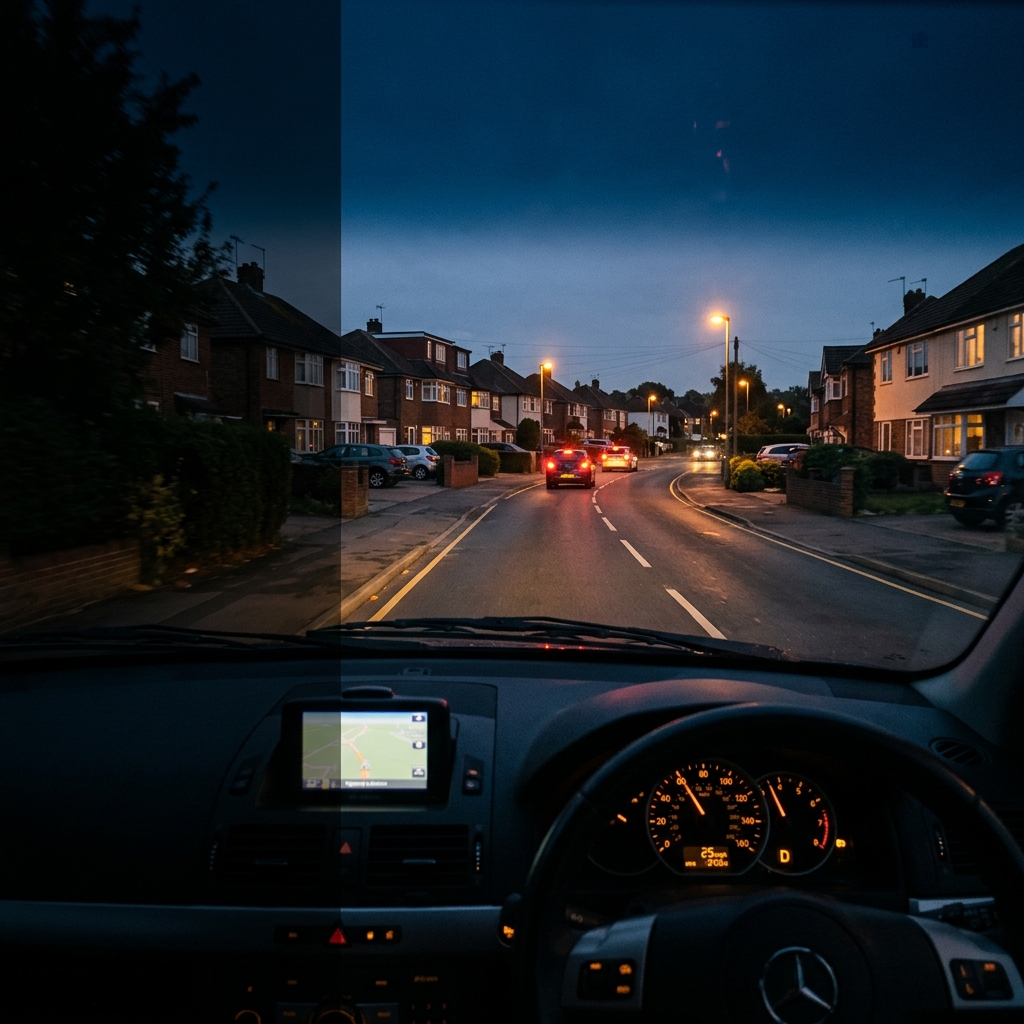

Estate Agent Mileage & Tax Relief Calculator
Find out exactly how much you can claim back from HMRC on your business mileage. Built for estate agents using the new 2026/27 approved mileage rates — no sign-up required.
Updated for the 2026/27 HMRC AMAP rate of 55p per mile. Covers cars, motorcycles, and bicycles. Includes Scottish Income Tax bands.
Calculate your mileage relief
Enter your details to see your HMRC entitlement and estimated tax refund for 2026/27.
Total miles driven for business in your personal vehicle this tax year. Do not include your daily commute to the branch.
Average number of property viewings you conduct per week
Average number of valuation or appraisal visits per week
Typical round-trip distance from branch to property
Excludes annual leave and bank holidays (default 46)
The pence-per-mile rate your employer currently reimburses. The HMRC limit is 55p — anything below creates a claimable shortfall.
Scottish rates: 19% Starter, 20% Basic, 21% Intermediate, 42% Higher, 45% Advanced, 48% Top
Your employer reimburses above the HMRC limit. The surplus of /year may be treated as a taxable benefit. Check with your payroll team.
Your results — 2026/27 tax year
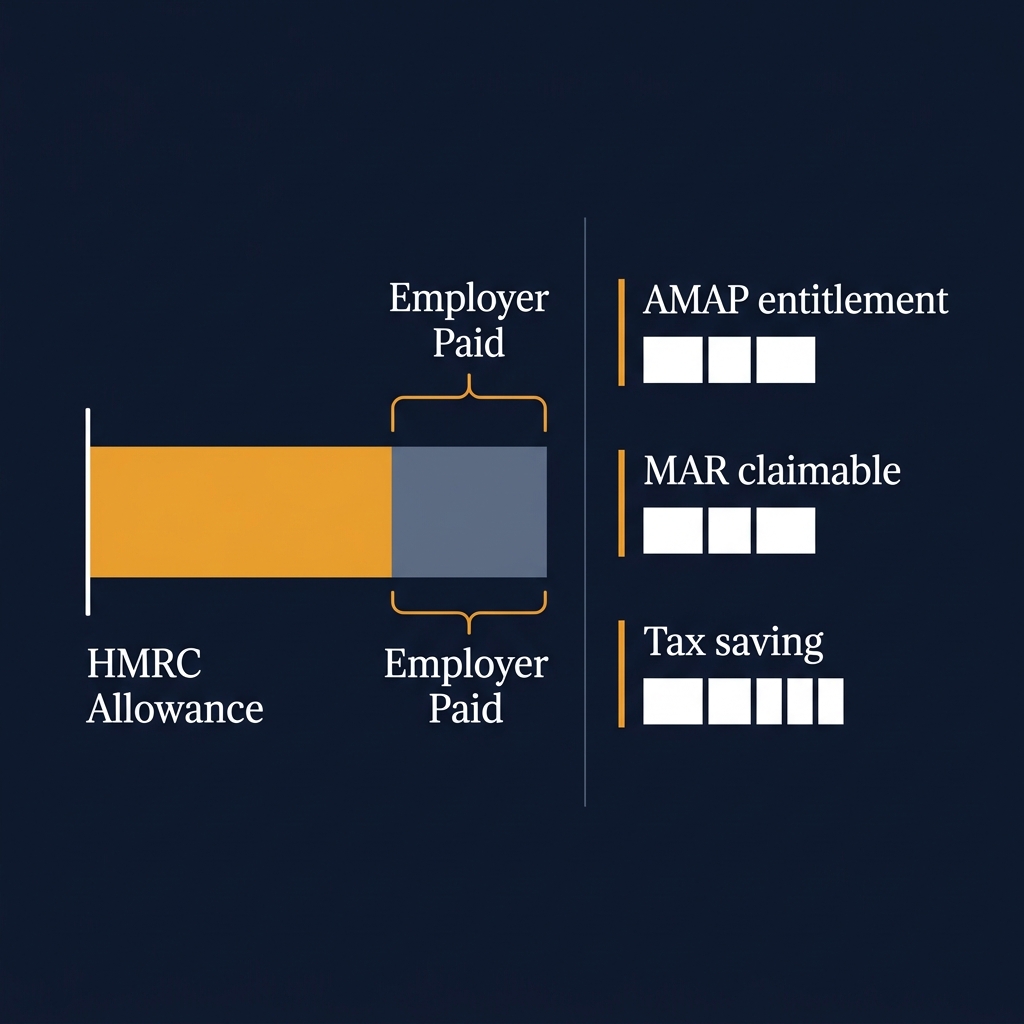
AMAP Entitlement
—
Maximum allowable HMRC figure
Employer Payments
—
What your employer already pays
MAR Claimable
—
Gross shortfall you can deduct from taxable income
Estimated Tax Saving
—
Estimated cash refund at your tax rate
These figures are estimates for general guidance only, based on 2026/27 HMRC AMAP rates and the data you provided. They do not constitute tax advice. Verify your final claim via GOV.UK before submitting.
What you need to make the claim
- 1
Gather your mileage log
Every qualifying journey needs a date, start postcode, destination postcode, and business purpose. HMRC has required this level of detail since October 2024.
- 2
Find your employer's PAYE reference
It's on your P60, P45, or digital payslip. You'll need this on the P87 form or Self-Assessment return.
- 3
Submit via Form P87 or Self-Assessment
Under £2,500 in relief → P87 online via Government Gateway. Over £2,500 → register for Self-Assessment. You can backdate up to 4 tax years.
What does an estate agent earn in mileage relief?
Estate agents are one of the UK's most heavily mileage-dependent professions, yet most agents never claim the full tax relief they're entitled to. The HMRC Approved Mileage Allowance Payment (AMAP) rate rose to 55p per mile in April 2026 after a 15-year freeze at 45p. If your agency reimburses you nothing — or less than 55p — you're leaving money on the table.
A typical active negotiator covering 14,000 business miles and receiving no employer reimbursement has an AMAP entitlement of £5,500. At the basic rate that's a £1,100 cash refund. Higher-rate taxpayers recover £2,200. Multiply that across four allowable backdated tax years and the unclaimed total can exceed £8,000 per agent.
2026/27 HMRC Approved Mileage Allowance Rates
| Vehicle | First 10,000 miles | Above 10,000 miles |
|---|---|---|
| Car / Van | 55p | 25p |
| Motorcycle | 24p | 24p |
| Bicycle | 20p | 20p |
Rates effective from 6 April 2026 (backdated to start of 2026/27 tax year). Source: HMRC / CIPP.
What counts as a business mile for estate agents?
Only business miles qualify for AMAP relief — not your daily commute. HMRC defines a business mile as travel to a temporary workplace. For estate agents this includes:
- Driving to a property for a viewing with a buyer or tenant
- Conducting a market appraisal or valuation visit
- Carrying out a property inspection or inventory check
- Attending an off-site client meeting
- Travel from branch to a temporary workplace (not home to branch)
FAQs: Estate Agent Mileage & Tax Relief
What is the HMRC mileage rate for estate agents in 2026/27?
From 6 April 2026 the HMRC AMAP rate for cars and vans rose to 55p per mile for the first 10,000 business miles and 25p per mile above that. Motorcycles remain at 24p flat and bicycles at 20p flat. This is the first increase in 15 years.
Can estate agents claim mileage tax relief for property viewings?
Yes. Driving to client properties for viewings, valuations, appraisals, and inspections qualifies as business mileage under HMRC rules because those are temporary workplaces. Your daily commute to the branch does not qualify.
How much can I claim back on mileage as an estate agent?
It depends on your annual business miles, your employer's reimbursement rate, and your tax band. For example: 12,000 miles, no employer payment, basic-rate taxpayer = AMAP entitlement £5,500, estimated cash refund £1,100.
Should I use Form P87 or Self-Assessment to claim mileage relief?
If your total claimable Mileage Allowance Relief is under £2,500 in the tax year, use Form P87 via Government Gateway or by post. If over £2,500 you must file a Self-Assessment tax return. Our calculator tells you which applies.
How far back can I claim mileage allowance relief?
HMRC allows claims for the current tax year plus the four previous tax years. In 2026/27 you can backdate to 2022/23. Note: the AMAP rate for 2025/26 and earlier was 45p, not 55p.
What mileage records does HMRC require?
Since October 2024, HMRC requires detailed mileage logs for all P87 submissions. Each entry needs: date, start postcode, destination postcode, business purpose, and total miles. You also need your employer's PAYE reference from your P60 or payslip.
Your people protected. Your business covered. Simple.
Get your team protected in under 60 minutes. No IT integration required.
No credit card required • Free 30-minute demo • Protect your team today